CAC News
Phnom Penh, March 17, 2026 — Cambodia’s Ministry of Agriculture has defended the country’s spending on imported fertilizers and agricultural chemicals, emphasizing that the investment generated significant economic returns while also pointing to growing efforts to promote more sustainable farming practices.
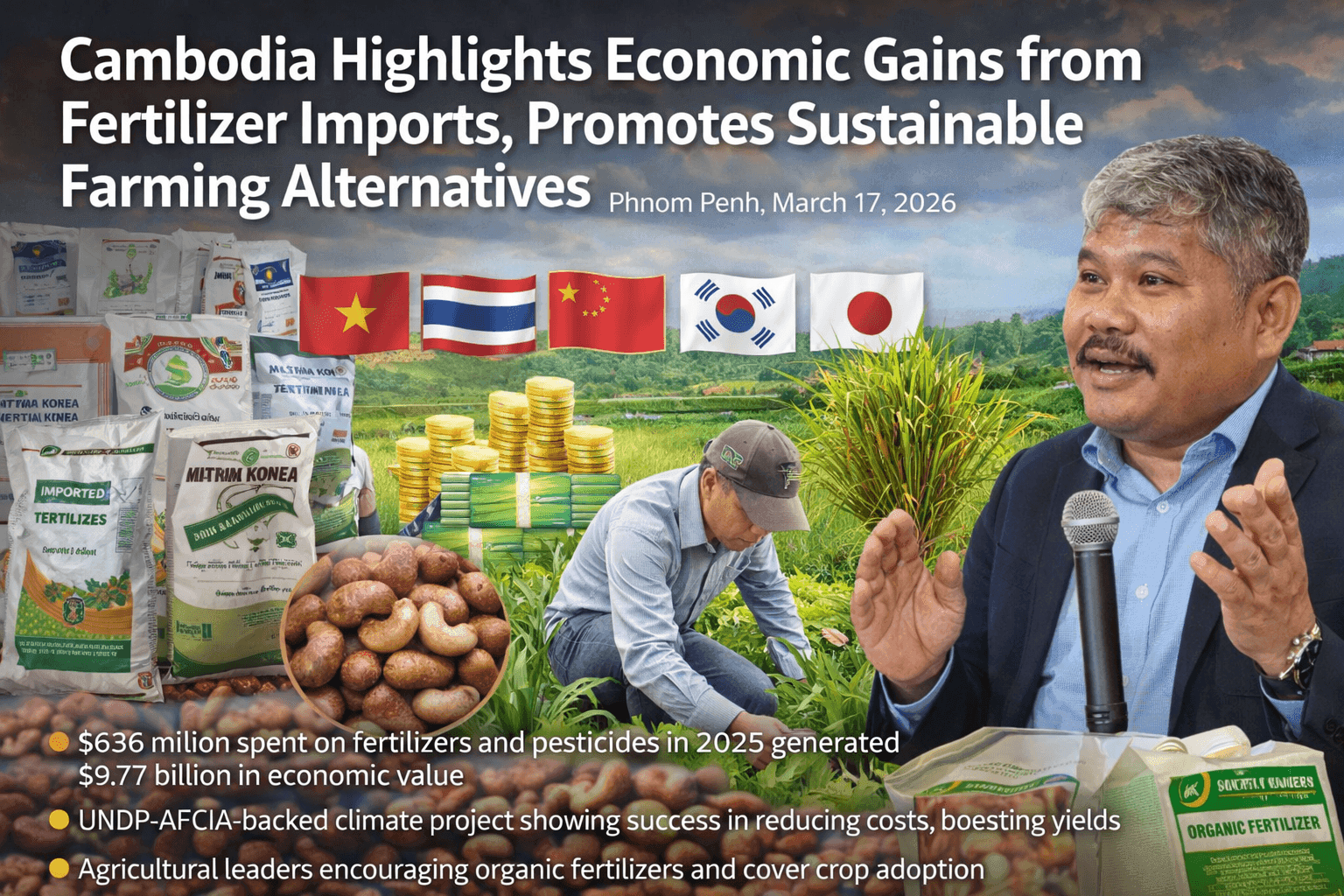
Ministry spokesperson Khim Finan said on Tuesday that Cambodia’s expenditure on fertilizers and pesticides—amounting to roughly $636 million in 2025—helped generate an estimated $9.77 billion in economic value. His remarks come after public concern over reports of high spending on agricultural inputs.
According to data from the Ministry of Commerce, Cambodia spent about $420 million on fertilizers and nearly $218 million on pesticides and herbicides last year. Most of these imports were sourced from neighboring and regional countries, including Vietnam, Thailand, China, South Korea, and Japan.
While imports remain a key component of agricultural productivity, the government and development partners are increasingly promoting sustainable alternatives. Under the Innovation for Climate Acceleration Project (ICAP), funded by UNDP-AFCIA, farmers in Battambang, Kampong Thom, and Preah Vihear provinces are adopting cover crops to restore soil fertility in rice farming systems.
Early results from the initiative show encouraging outcomes. Rice yields have increased from around 800 kilograms to 1,000 kilograms per hectare, input costs have dropped by 25–30 percent, and farmers’ profits have risen by up to 10 percent.
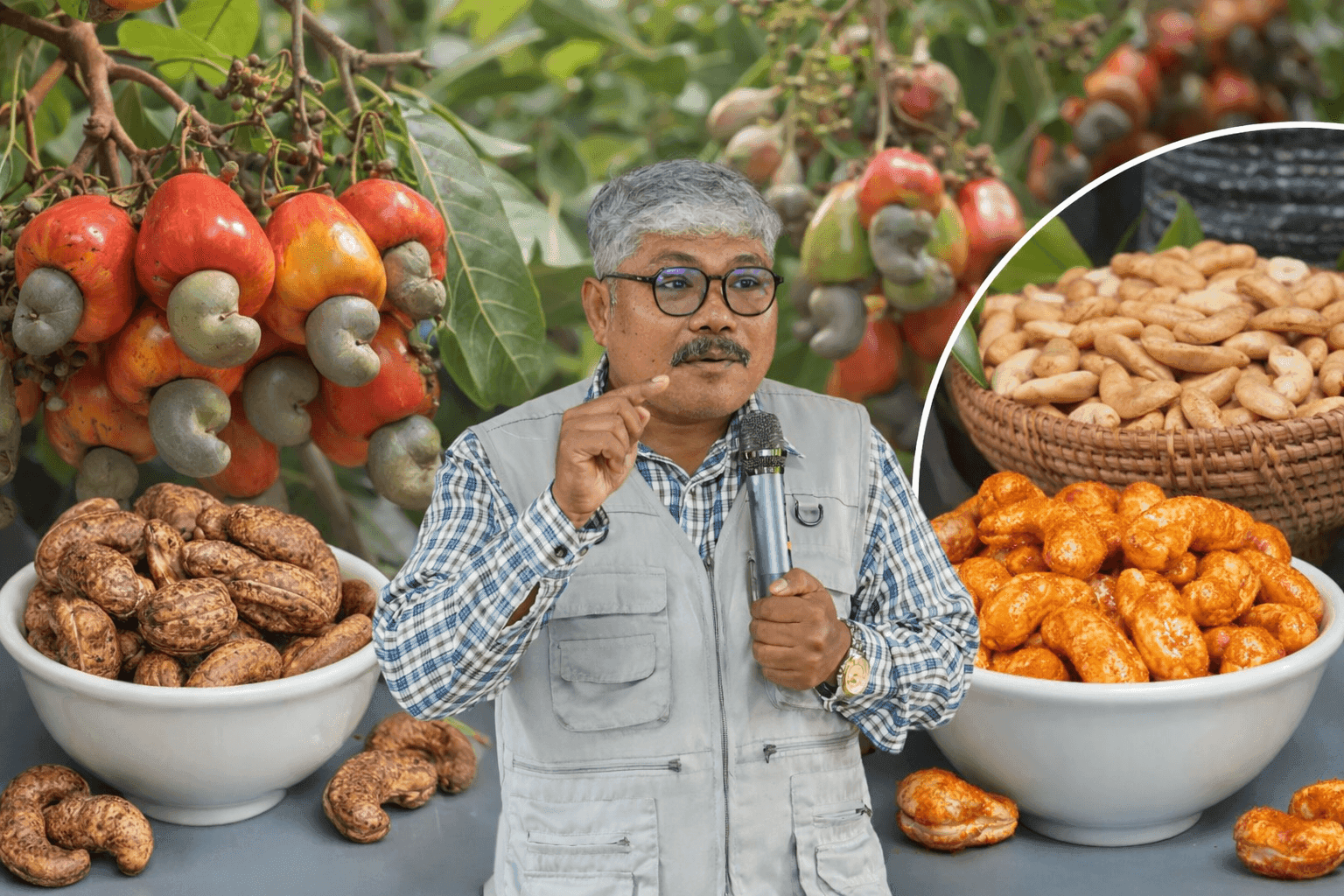
In the cashew sector, industry leaders are also advocating for reduced reliance on chemical inputs. Silot Uon, president of the Cashew Nut Association of Cambodia (CAC), encouraged farmers to consider domestically produced organic fertilizers, which are more affordable and accessible, even if they may be slightly less effective than chemical alternatives.
He noted that CAC has introduced various sustainable farming techniques to cashew growers, including cover crops, though adoption has been limited due to resource constraints. The CAC has also promoted the use of homemade foliar fertilizers and biological solutions such as Highly Effective Micro-organisms (HEM), Indigenous Micro-organism Bacillus subtilis (IMOBs), and Effective Micro-organisms (EM) to help farmers reduce production costs and improve resilience to climate change.
As Cambodia balances productivity with sustainability, officials and industry stakeholders continue to explore ways to reduce dependence on imports while supporting farmers with cost-effective and environmentally friendly practices.