
CAC News
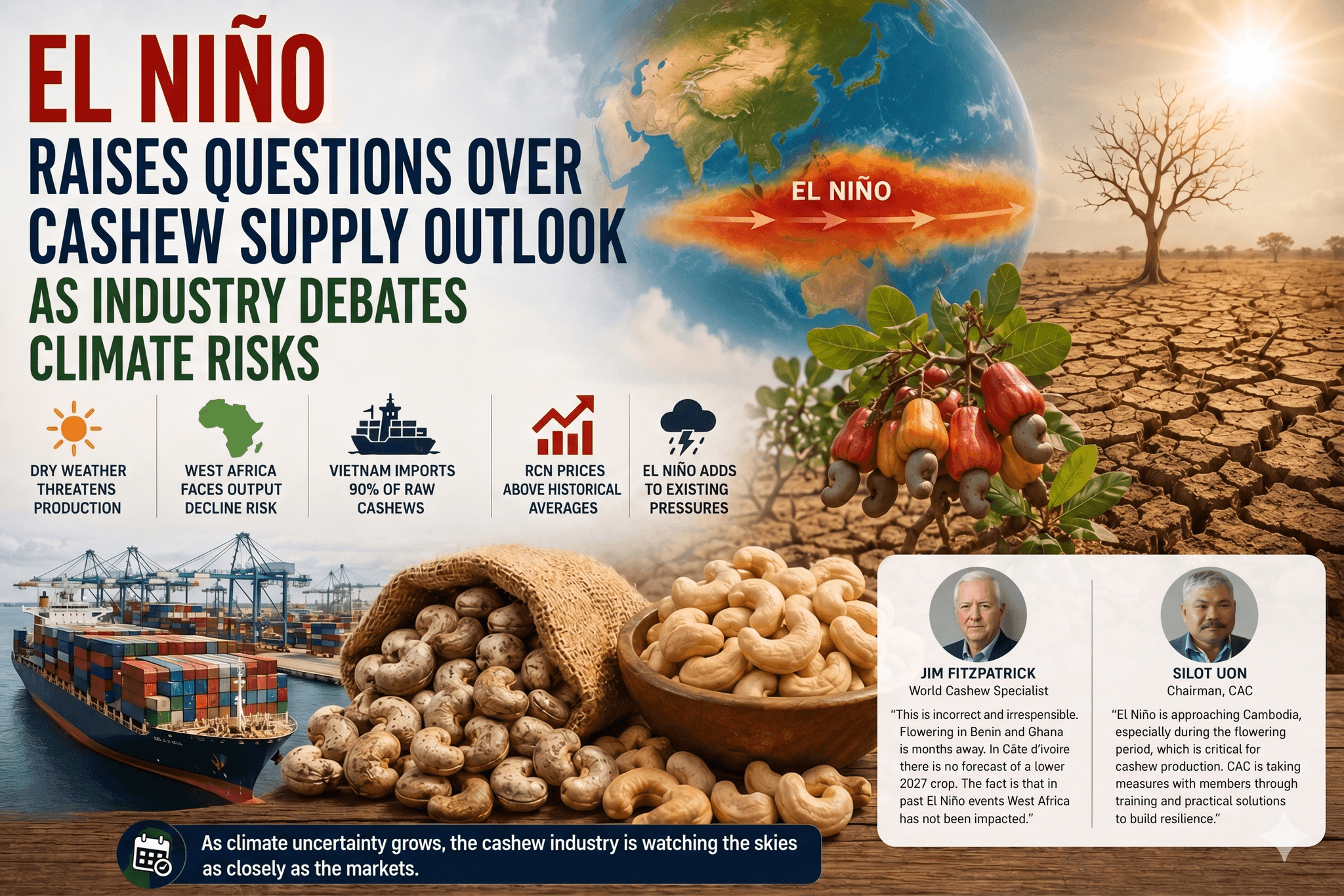
PHNOM PENH, June 2026 — Emerging El Niño conditions forecast for late 2026 are drawing increased attention from the global cashew industry, with concerns that prolonged dry weather could affect production in key growing regions and add further pressure to an already challenging supply chain.
According to Vietnam's Ministry of Agriculture and Environment, El Niño conditions are expected to develop toward the end of 2026. The climate pattern is often associated with drier-than-normal conditions across parts of West Africa and Southeast Asia, regions that play critical roles in global cashew production.
Industry analysts note that the timing could be significant for the cashew sector. Côte d'Ivoire, the world's largest producer of raw cashew nuts (RCN), has reported concerns over persistent dryness, with some projections suggesting a potential 5–10% decline in output. Early climate outlooks have also raised questions about possible stress on future crops in countries such as Benin and Ghana if dry conditions continue into upcoming flowering periods.
Raw cashew nut prices have remained well above historical averages heading into the new season, reflecting ongoing uncertainty in global supply chains.
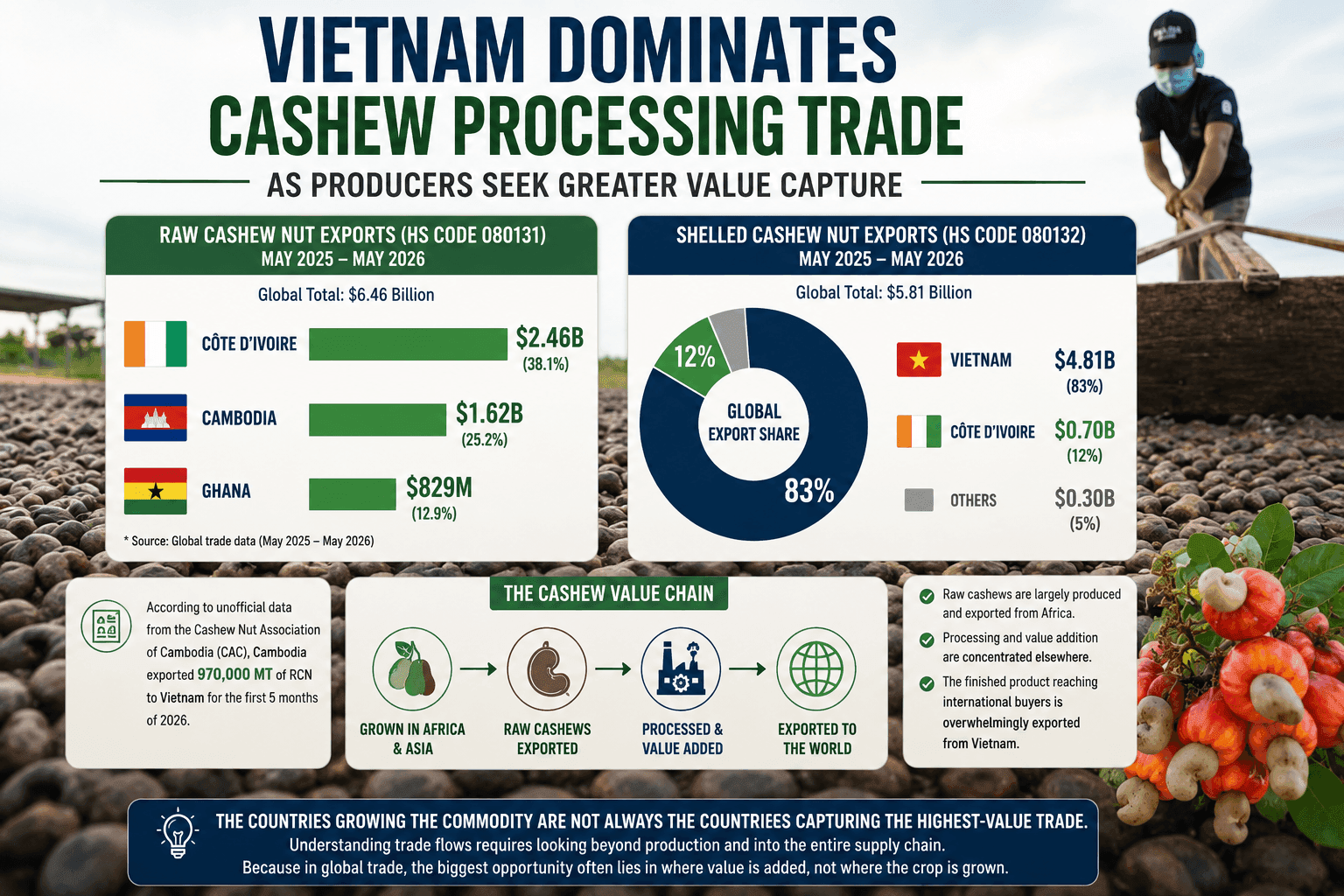
Vietnam, the world's largest cashew-processing and exporting nation, may be particularly exposed to supply disruptions. The country imports approximately 90% of its raw cashew material from overseas suppliers, making processors highly dependent on harvest conditions in producing countries.
Industry participants warn that any climate-related production shock would come on top of existing challenges, including freight market disruptions, evolving U.S. tariff policies, and increasing compliance requirements in European markets.
However, not all experts agree that El Niño currently poses a major threat to West African cashew production.
Jim Fitzpatrick, a globally recognized cashew industry specialist, strongly disputed claims that the climate phenomenon is likely to reduce crops in major West African producing countries.
"This is incorrect and irresponsible," Fitzpatrick said. "Flowering in Benin and Ghana is months away. In Côte d'Ivoire there is no forecast of a lower 2027 crop. The fact is that in past El Niño events West Africa has not been impacted."
Fitzpatrick urged market participants to avoid drawing premature conclusions about future production and warned against speculation that could unnecessarily influence raw cashew nut prices.
In Cambodia, where the cashew sector has expanded rapidly in recent years, industry leaders are taking a more cautious approach.
Silot Uon, Chairman of the Cashew Nut Association of Cambodia (CAC), said Cambodia's industry cannot ignore the potential risks posed by Super El Niño, particularly because the country is now among the world's largest producers of raw cashew nuts.
"El Niño is approaching Cambodia, especially during the flowering period, which is a critical stage for cashew production," Silot said. "While the exact impact remains uncertain, we believe it is important to prepare our farmers and processors."
According to Silot, CAC has begun working with its members to improve resilience through training programs and practical field-level solutions designed to help farmers adapt to potential weather-related disruptions.
As the industry enters another production cycle, market participants will be closely monitoring both weather forecasts and crop conditions across major producing regions. Whether El Niño develops into a significant threat or proves less disruptive than feared, experts agree that climate resilience is becoming an increasingly important factor in the future of the global cashew trade.