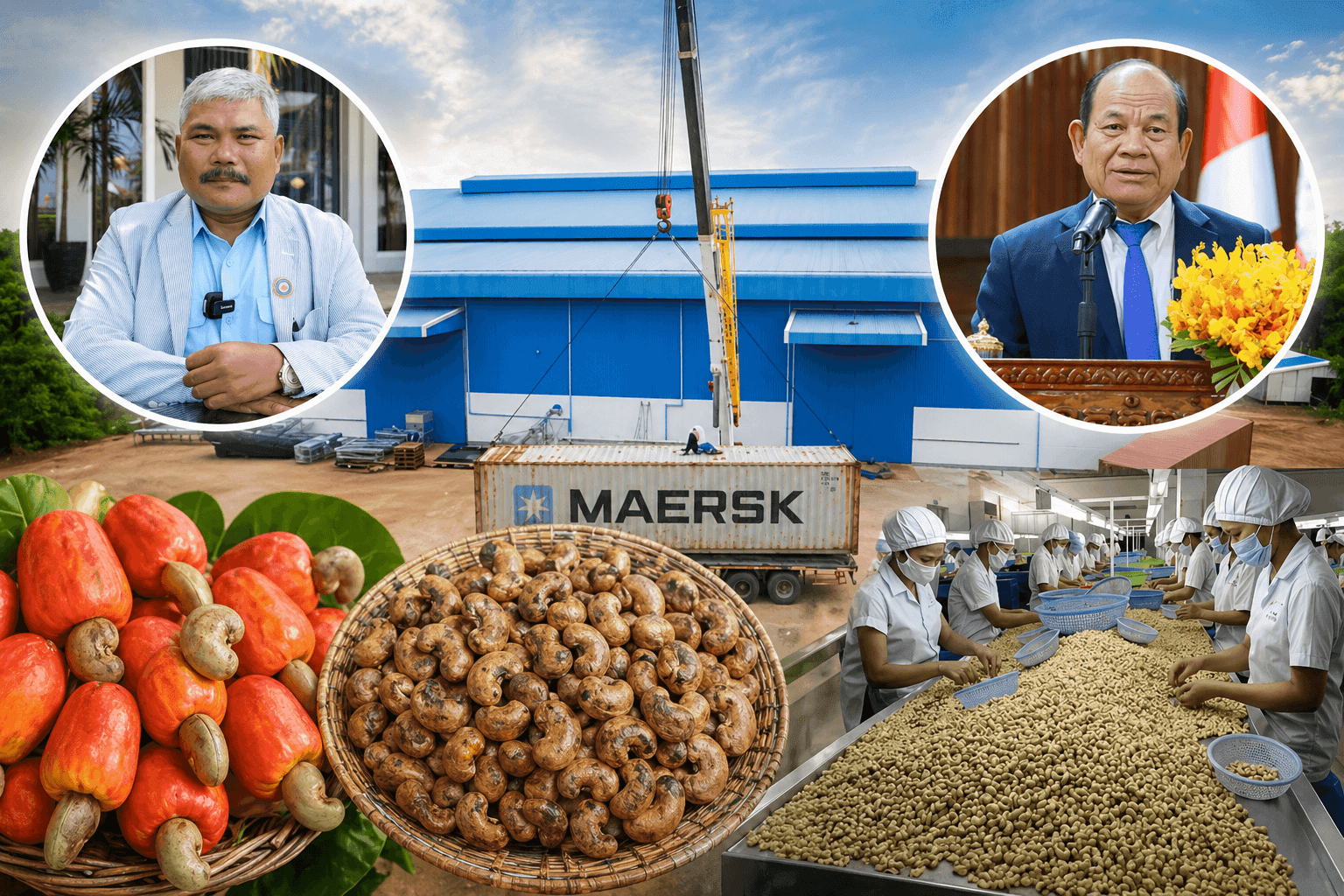
PHNOM PENH – Investing in the establishment of domestic processing plants is a core strategy to transform Cambodia into a "Cashew Emperor" by increasing value-add and reducing the export of raw cashew nuts (RCN).
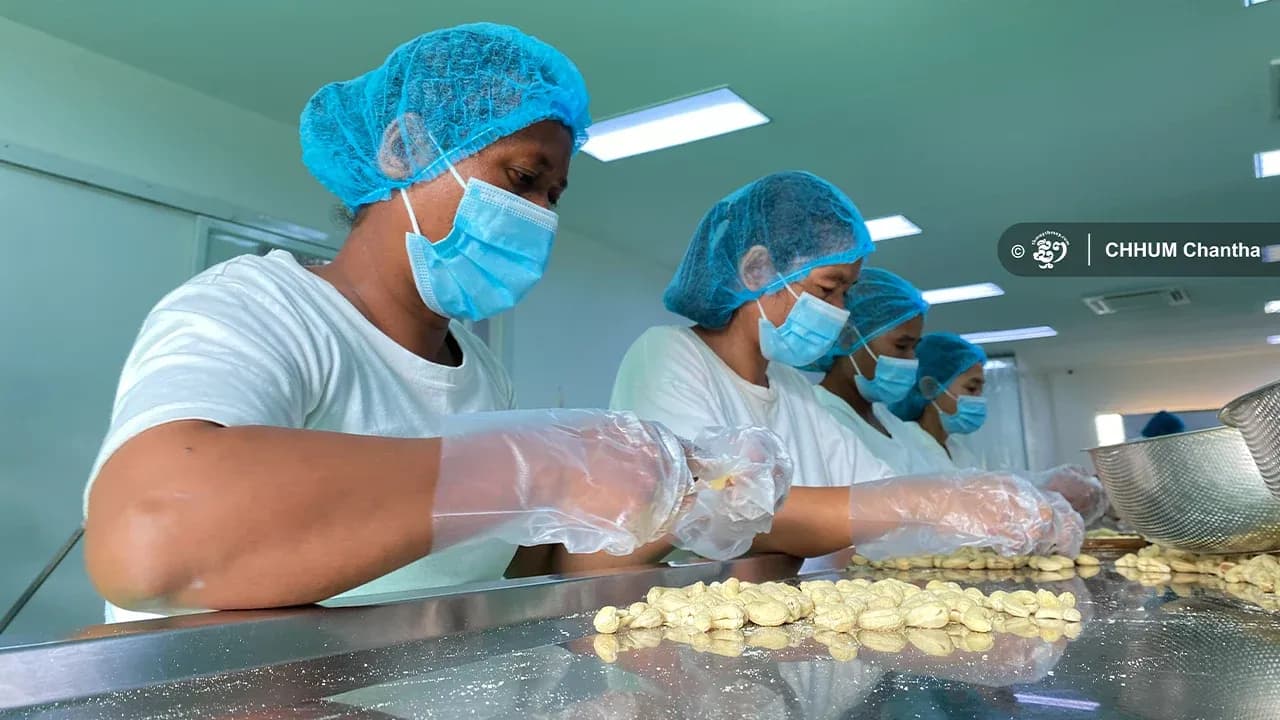
In the past, Cambodia exported an overwhelming volume of raw cashews to international markets, particularly to Vietnam. Establishing more local processing plants will allow Cambodia to shift from raw exports to high-value finished products, reducing the risk of price drops caused by external market fluctuations. Furthermore, increasing processing capacity not only benefits plantation owners but also creates numerous job opportunities for the Cambodian people.
Mr. Silot Uon, President of the Cashew Nut Association of Cambodia (CAC), stated that in accordance with the National Policy on Cashew 2022–2027, the Royal Government has been providing incentives to investors by streamlining procedures and prioritizing processing. The primary goal is to increase processing capacity to at least 25% by 2027 and reach 50% by 2032.
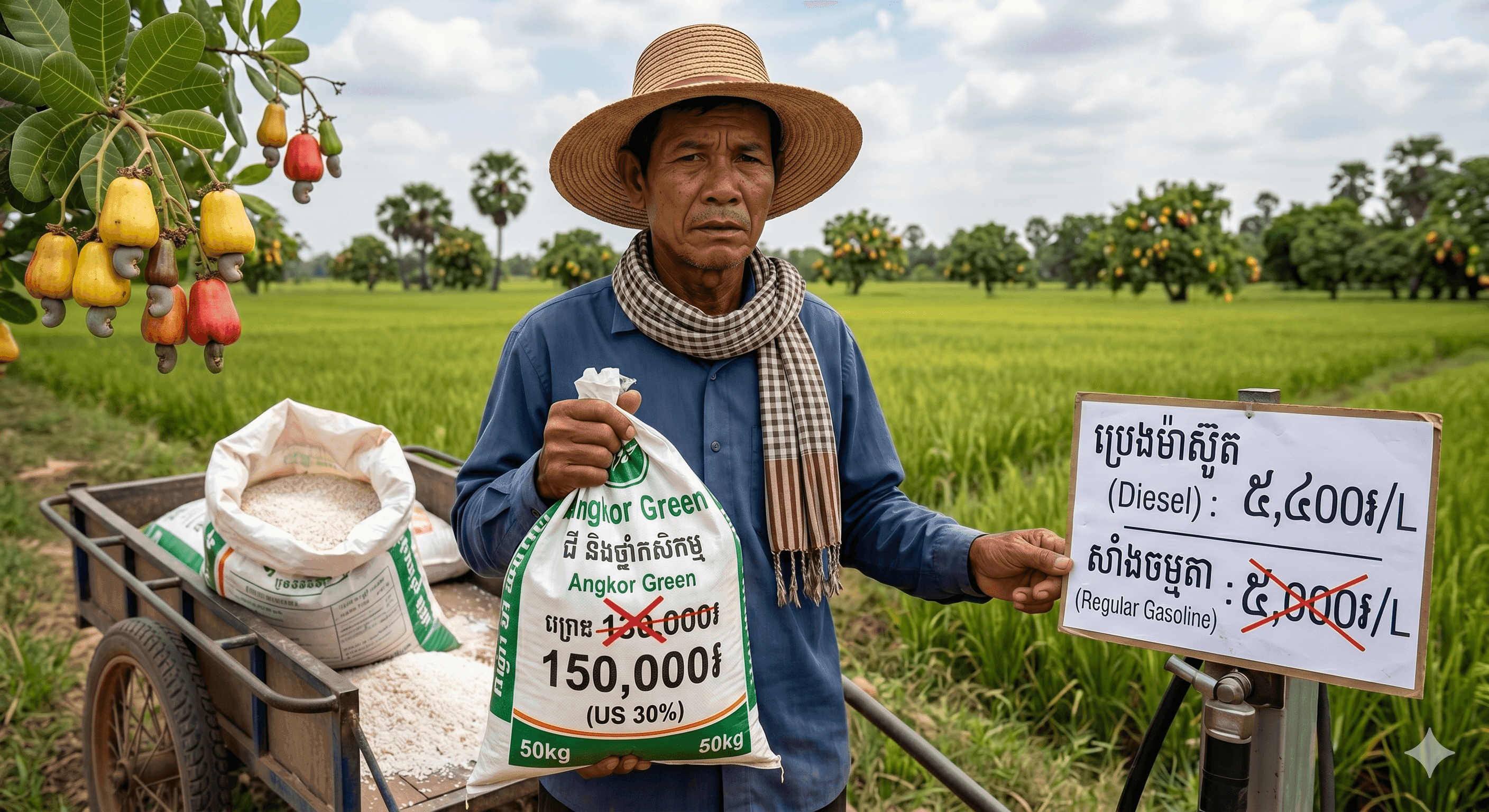
However, despite strong potential, the sector faces challenges such as high production costs, electricity rates, and transportation fees. Technically, there is a limited supply of modern machinery and a need for higher hygiene standards required for international export.
"Promoting more cashew processing plants is an indispensable step to ensure agro-industrial economic sustainability," Mr. Silot Uon added. "Once Cambodia has stronger processing capabilities, it will act as a magnet for more foreign investors in both cultivation and further processing."
Notably, Korean investors recently committed over $5 million to build a cashew processing plant in Kampong Thom province. Construction is set to begin in late 2026 and finish by 2029. Mr. Uon Silot noted that there is significant interest from Korean investors. Through the Governor of Kampong Thom, one major company is awaiting approval. Another factory project is coming via a Korean association and the Council of Ministers, while a third is coming through the CAC. Due to QIP (Qualified Investment Project) requirements—projects officially registered and certified by the Council for the Development of Cambodia (CDC)—the CAC encouraged them to look at Kratie province in the Northeast, where conditions are more favorable. Currently, one factory has moved to Kratie, while two in Kampong Thom are pending.
Mr. Silot clarified: "To date, we have 50 plants, but only 6 are medium-sized; the rest are small family-run operations. A medium-sized plant can process between 7,000 to 14,000 tonnes of RCN. However, these plants are not yet operating at full capacity. Some medium plants simply buy nuts to dry and store, then resell them raw because reselling raw nuts currently proves more profitable than processing. Thus, our domestic processing remains limited."
The Association President added that Cambodia needs technology and technical expertise. While Cambodia produces up to 1 million tonnes of RCN, only about 26,000 tonnes were processed domestically in 2025 (yielding 6,000 tonnes of finished kernels). While many plants exist, they lack the working capital to stockpile nuts. In 2026, if commercial banks provide even $50 million in low-interest loans, processors could stockpile approximately 30,000 tonnes of RCN.
According to H.E. Ouk Rabun, Chairman of the Council for Agricultural and Rural Development (CARD), the new $5 million plant will process 20 tonnes per day—a vital step for global exports. The project aims to build "Modern Agricultural Communities" through training in post-harvest handling, drying, storage, and market access.
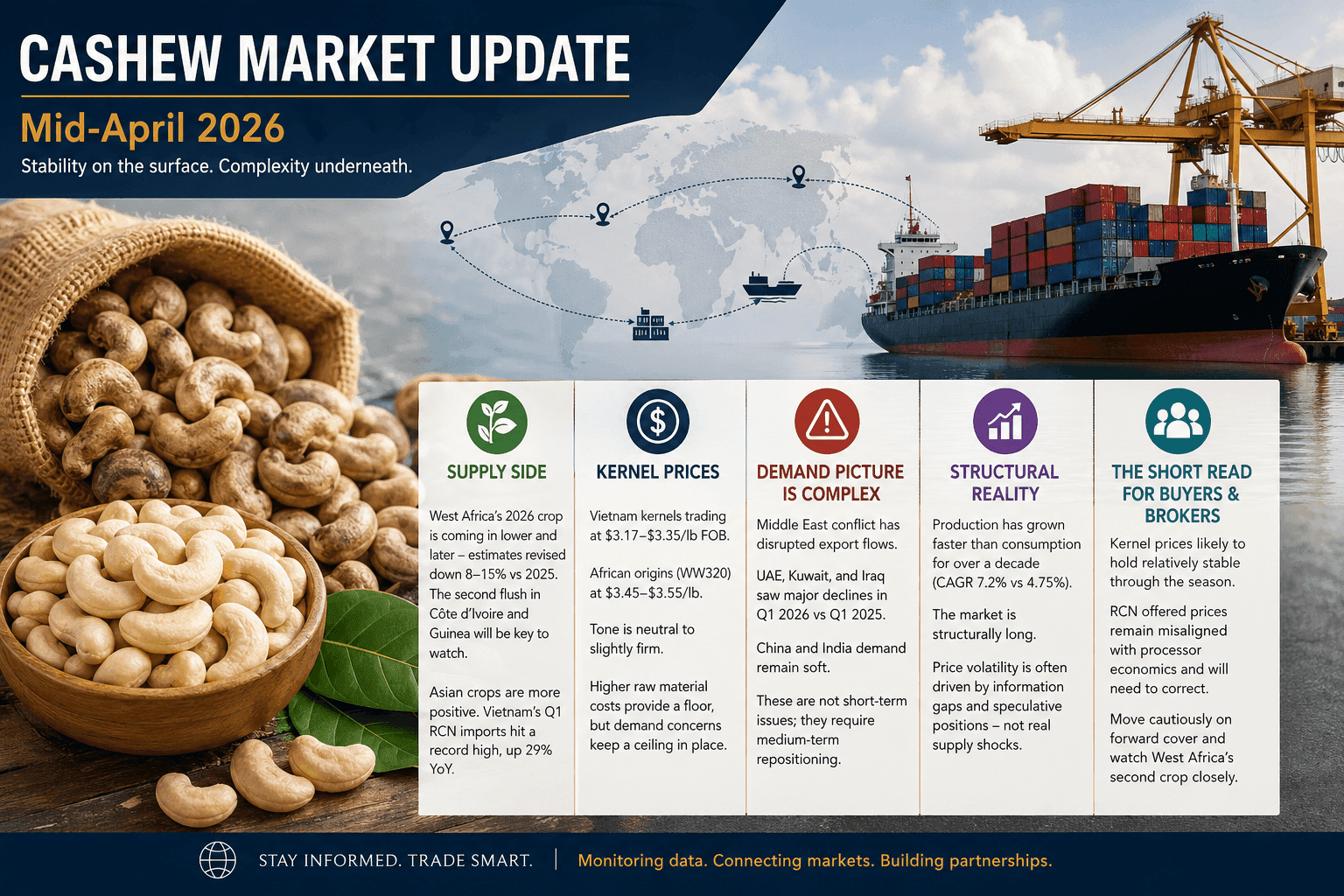
In 2025, Cambodia exported 1 million tonnes of RCN worth $1.5 billion, a 27% increase over 2024. Ministry of Commerce reports show that in Q1 of 2026, Cambodia earned over $358 million from cashew exports, up 22% from $292 million in Q1 2025. Vietnam remains the top destination, accounting for $356.83 million (over 90% of total volume).
The Australian Embassy recently highlighted that Australia and Japan are working together to strengthen Cambodia's cashew sector. With support from both governments, MIRARTH Agri Tech in Kampong Thom is boosting local processing, ensuring smallholder farmers receive fair and stable prices. Japan has helped MIRARTH strengthen supply chains and study waste reduction, while Australia has increased the company's export readiness through training and business matching at the 2025 World Cashew Conference. MIRARTH plans to process 3,000 tonnes in 2025 with a "zero-waste" goal.
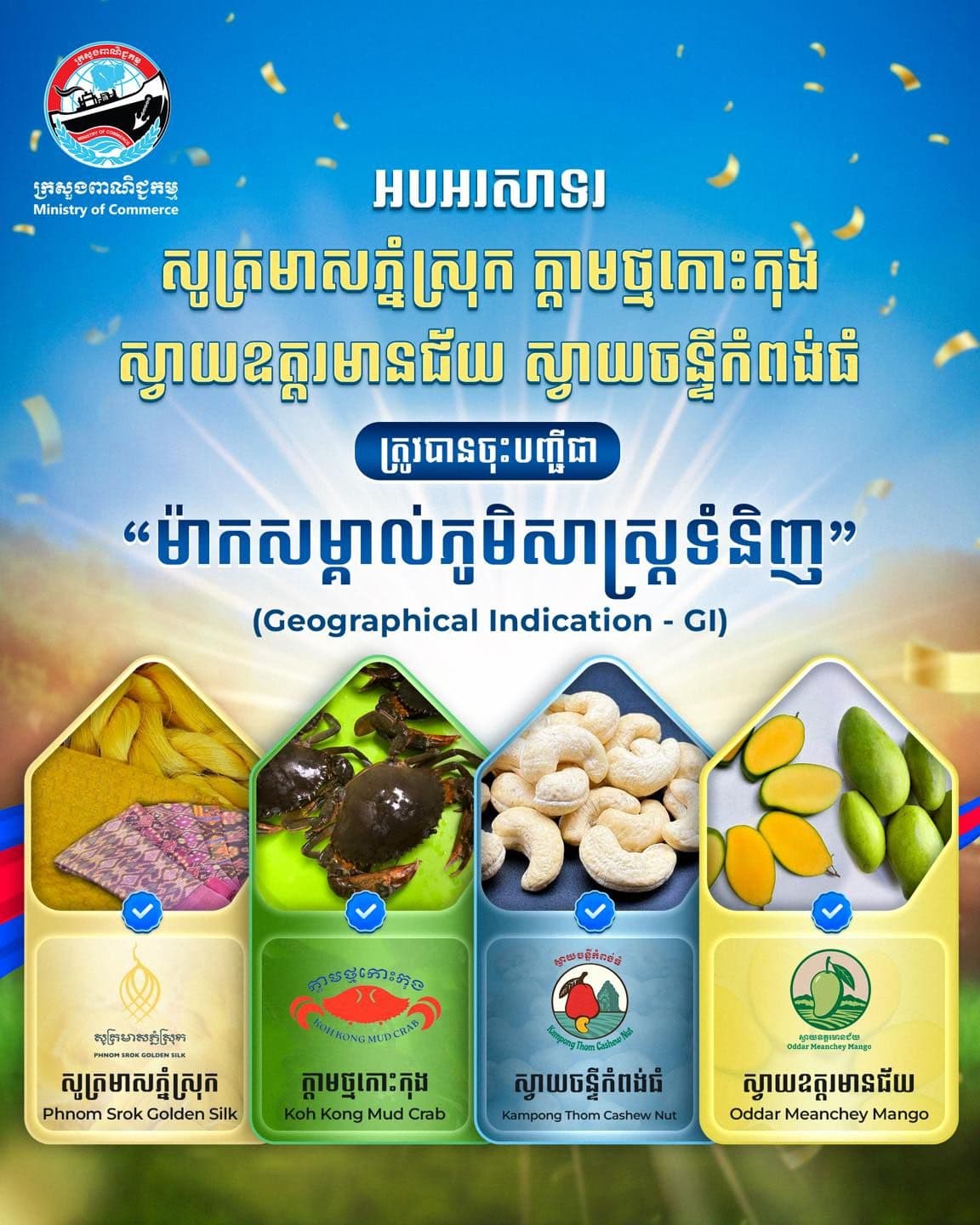
Furthermore, Kampong Thom Cashew Nuts—known for being large, crunchy, and having a buttery flavor—have been officially registered by the Ministry of Commerce as a Geographical Indication (GI). This is a key step in protecting producer rights and promoting the Khmer brand identity globally.
The Royal Government has implemented four necessary measures to boost the sector:
- Strengthening semi-product exports (dried RCN) as an initial step before expanding full processing capacity.
- Reinforcing Branding and Marketing.
- Promoting the formation of new Cashew Farmer Communities.
- Exploring increased working capital for procurement and infrastructure investment.
According to the CAC, Cambodia currently has approximately 740,000 hectares of cashew cultivation. In 2025, the total RCN harvest reached 1,020,757 tonnes, with 1,000,757 tonnes exported to Vietnam ($1.5 billion). As of early 2025, there are 52 processing enterprises, 6 of which are medium-sized (annual capacity of 7,000 to 14,000 tonnes), while the other 46 are small, family-scale workshops.