CAC News
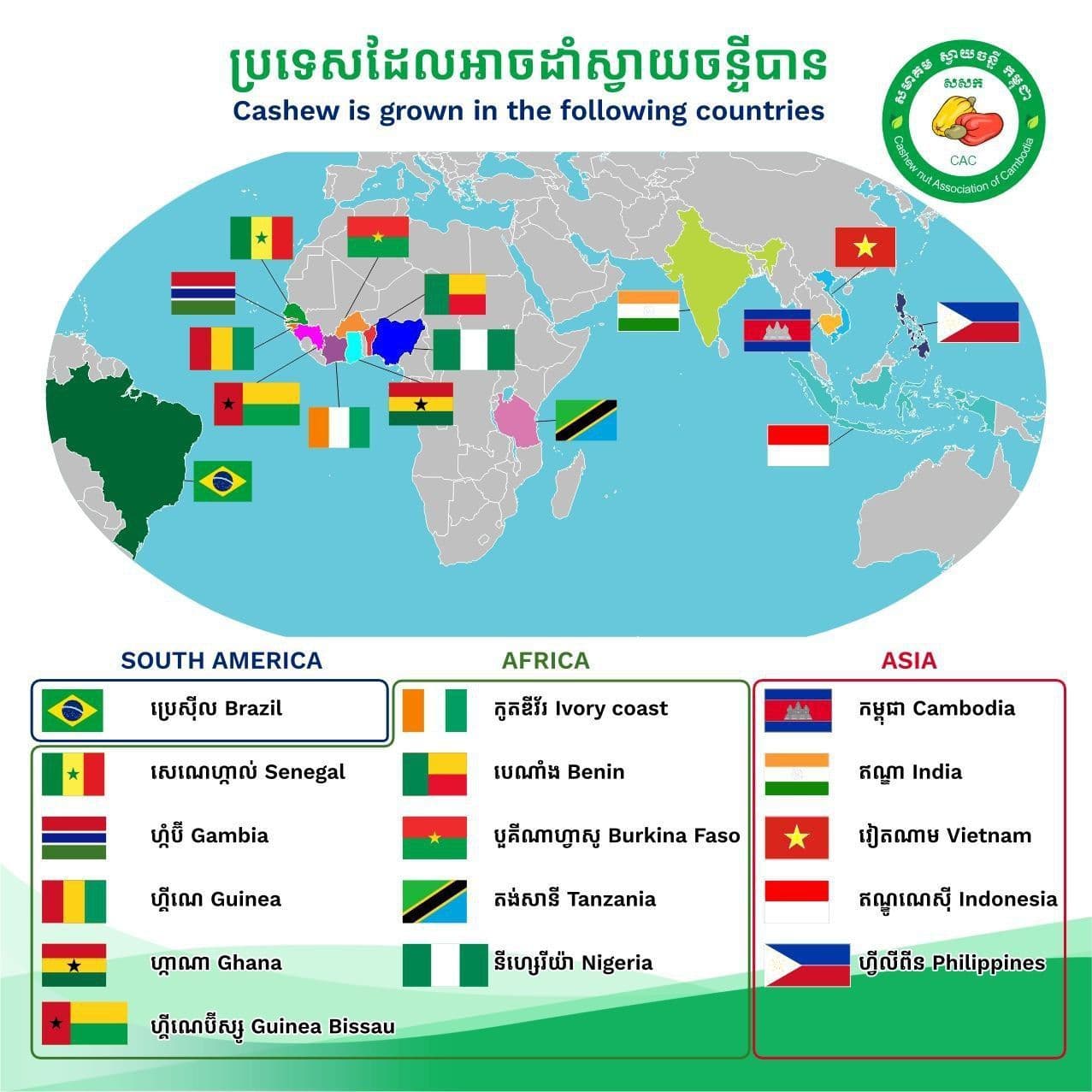
West Africa’s cashew industry is undergoing rapid transformation, with rising domestic processing capacity and new government policies aimed at strengthening value addition and global competitiveness. The expansion, led by Côte d'Ivoire and Benin, is beginning to reshape the global cashew supply chain and challenge the long-standing dominance of Vietnam in processing and exports.
Industry discussions at recent global cashew forums have highlighted shifting supply chain priorities and growing investments in processing facilities across West Africa. Stakeholders say the developments could influence policy directions in countries such as Nigeria and Benin, where governments are exploring strategies to strengthen domestic value chains.
Côte d’Ivoire Leads Processing Expansion
Côte d’Ivoire has emerged as the region’s leading processor, now accounting for a large share of West Africa’s processed cashew kernels. In 2025, the country processed about 660,000 tons of cashews — a 92 percent increase from the previous year — with installed processing capacity reaching approximately 830,000 tons.
The country currently operates 37 processing facilities that handle grading and packaging locally, enabling exporters to ship finished kernels directly to European markets. Kernel exports reached an estimated $623 million in 2025, representing a 67 percent increase year-on-year.
A decade ago, most West African cashews were exported as raw nuts to Asia for processing. Today, regional processing is expanding, supported by improved infrastructure and technical expertise.
However, industry observers note that raw cashew nut (RCN) exports remain the primary outlet for most African producers. Analysts also point out that a significant share of Côte d’Ivoire’s processing capacity is owned or managed by foreign investors and relies heavily on imported processing equipment.
Benin Focuses on Domestic Processing
In Benin, authorities have taken stronger steps to promote local processing by halting raw cashew nut exports in order to prioritize domestic value addition. The policy aims to encourage investment in processing plants and improve returns for the national economy.
With support from the World Bank, Benin is also working to improve plantation productivity and expand processing capacity. The country has reported steady growth in cashew production and is targeting higher harvest volumes in the coming years.
Nigeria Debates Export Policies
Nigeria’s cashew sector is also undergoing policy debate as the government evaluates options to increase value addition. Industry experts estimate that Nigeria could generate up to $10 billion annually from cashews with appropriate investment and policy support.
Discussions over a possible ban on raw cashew nut exports have generated mixed reactions. The National Cashew Association of Nigeria (NCAN) has opposed such a ban, arguing that balanced policies are needed to support both exports and domestic processing while protecting farmer incomes.
Ghana Moves Toward Value Addition
Meanwhile, John Dramani Mahama, President of Ghana, has announced that the country intends to stop exporting raw cashew nuts and will instead promote domestic processing and value addition. He has called on investors and industry stakeholders to establish processing facilities to strengthen the national cashew industry.
Growing Competition in the Global Market
The rapid expansion of processing capacity in West Africa is increasing competition in the global cashew trade. While Asian processors continue to dominate the sector, the emergence of African processing hubs is gradually reshaping trade flows.
Industry analysts caution that despite the progress, major structural challenges remain, including financing constraints, infrastructure gaps and dependence on foreign technology. They emphasize that continued investment and realistic policy planning will be necessary to sustain long-term growth in the region’s cashew industry.