CAC News
Kampong Thom, July 2026 — Côte d’Ivoire has significantly strengthened its position in the global cashew industry by expanding domestic processing and increasing exports of value-added cashew kernels, offering valuable lessons for other major producing countries, including Cambodia.
According to market data from N’kalô, Côte d’Ivoire exported 44,403 metric tons of cashew kernels during the first five months of 2026, representing a 51 percent increase compared with the same period last year. The country is now the world's second-largest exporter of cashew kernels after Vietnam and the only one among the four leading exporters—Vietnam, India, Brazil and Côte d’Ivoire—to record export growth.
The increase follows a policy by Côte d’Ivoire’s Cotton and Cashew Council to reserve February and March for supplying domestic processing factories instead of allowing exports of raw cashew nuts. As a result, raw cashew exports declined sharply to 256,000 metric tons, compared with 390,000 metric tons during the same period in 2025.
The government has also introduced incentives to support local processors, including an export subsidy of 400 FCFA per kilogram of cashew kernels and exemptions from customs duties and value-added tax on industrial equipment.
These policies have accelerated the country's industrialization of the cashew sector. The national processing rate increased from 6.2 percent in 2014 to 43 percent in 2025, with approximately 659,000 metric tons processed domestically. Côte d’Ivoire now operates around 40 processing plants, compared with just three a decade ago.
Despite this progress, a significant share of Ivorian cashew kernels continues to be exported to Vietnam in "borma" form—shelled but not yet skinned. During the first five months of 2026, shipments of this semi-processed product to Vietnam reached 14,410 metric tons, a 160 percent increase year-on-year.
Industry analysts note that Vietnam, which controls around 70 percent of global cashew trade, completes the final processing and exports the products under Vietnamese branding. According to cashew market expert Jim Fitzpatrick of Ecofin Agency, this trade pattern limits the development of a distinct African identity for finished cashew products in international markets.
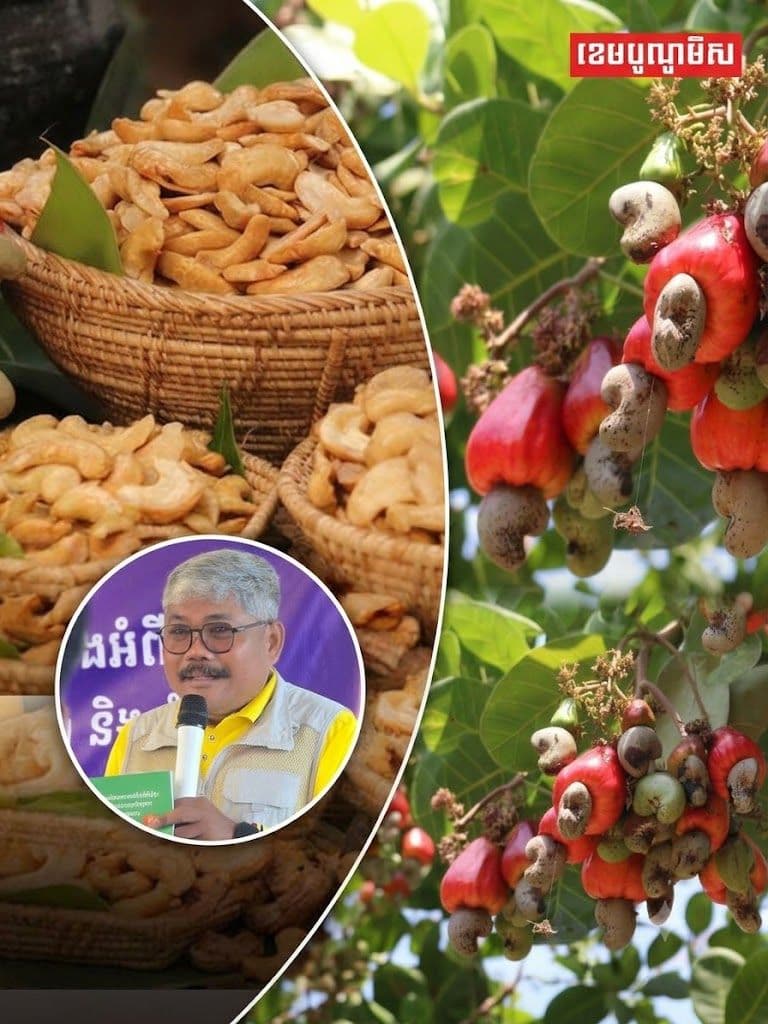
Commenting on the development, Silot Uon, Chairman of the Cashew Nut Association of Cambodia (CAC), praised Côte d’Ivoire's commitment to expanding domestic processing and value addition.
"Côte d’Ivoire has demonstrated that strategic government policies and investment in processing can transform a raw commodity into a high-value export industry," he said. "This is an area CAC can learn from."
Silot noted that although Cambodia is the world's second-largest producer of raw cashew nuts, only a small portion of its harvest is processed domestically. He said expanding local processing capacity would enable Cambodia to capture greater value, create more jobs and strengthen the country's competitiveness in the global cashew industry.
The Ivorian experience, he added, highlights the importance of coordinated policies, investment incentives and industrial development in building a sustainable and competitive cashew value chain.
Reference: Cashew App