CAC News
PHNOM PENH — The Cashew Nut Association of Cambodia (CAC) is expanding its international engagement with major cashew-producing countries as Cambodia seeks to strengthen domestic processing, attract investment and ensure that farmers benefit from the country's growing raw cashew nut (RCN) industry.
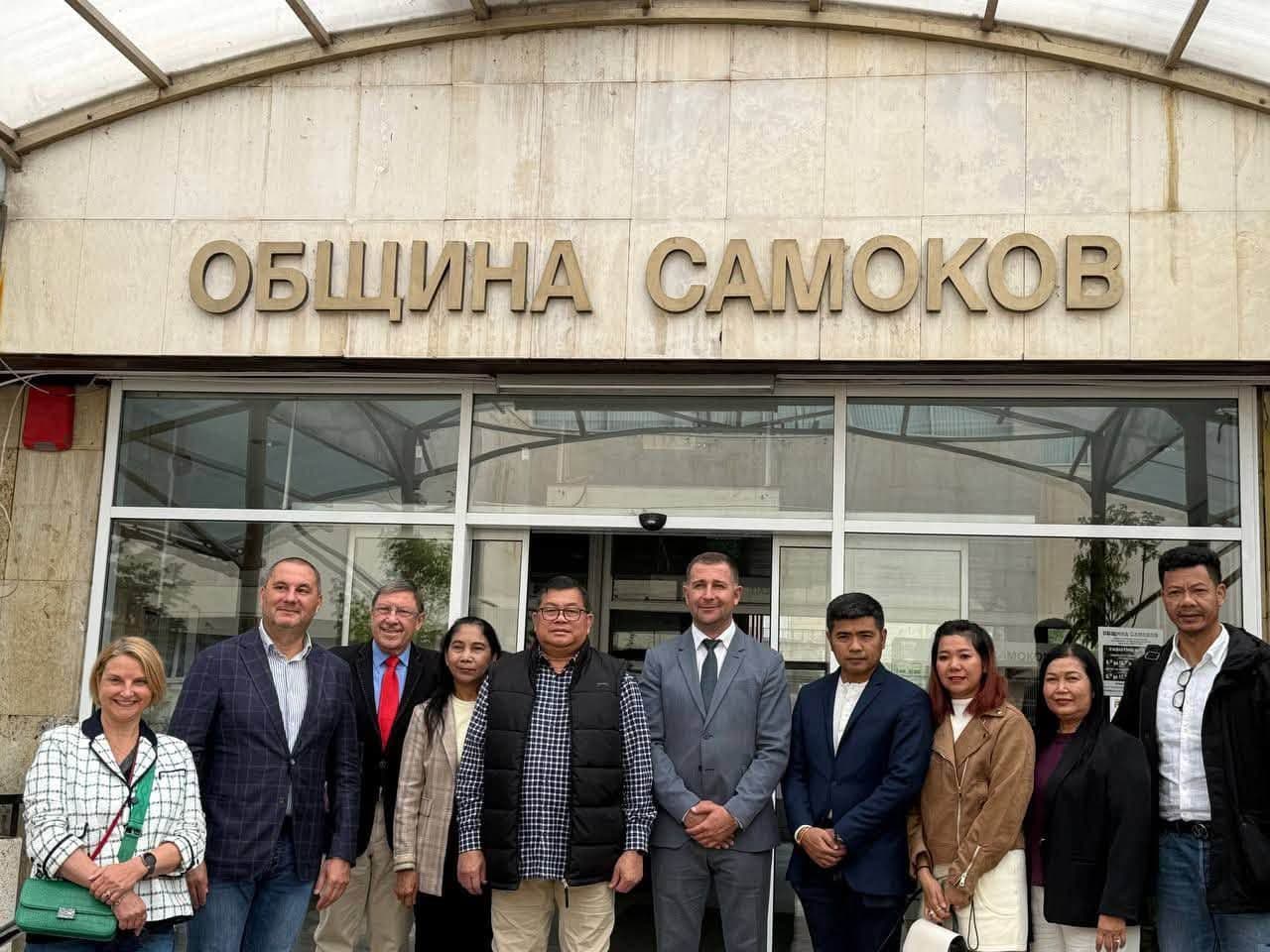
CAC has been building international experience and partnerships through study missions to major cashew-producing regions. In 2023, CAC sent a representative to West Africa to study the cashew value chain, gaining first-hand knowledge of production, processing, trade and industrial development.
Since then, CAC has developed working relationships with major RCN-producing countries, including Ghana, Nigeria and Côte d'Ivoire, while continuing to exchange experiences with stakeholders across the global cashew industry.
As part of this international learning effort, CAC plans to send a representative to Tanzania in East Africa to study the country's cashew industry, including its production and processing practices. Tanzania is internationally recognized as an important producer of high-quality cashew kernels, including the sought-after W180 grade.
Cambodia Emerges as Major RCN Producer
Cambodia has rapidly strengthened its position in the global cashew industry.
During the first eight months of 2026, Cambodia produced approximately 1.08 million metric tonnes of raw cashew nuts, generating an estimated $1.8 billion in value, according to figures cited by the sector. This represents approximately a 29% increase compared with the corresponding period.
Despite its large production base, however, Cambodia continues to process only a small proportion of its RCN domestically, estimated at around 2%. This creates both a challenge and a significant opportunity.
For CAC, the central question is not simply how Cambodia can build more processing factories, but how the country can develop a sustainable value chain that benefits farmers, processors, investors and the wider economy.
Côte d'Ivoire Offers Lessons for Cambodia
Côte d'Ivoire provides an important example for Cambodia as it works to expand domestic processing.
A recent study identified 23 active cashew processors in 2024, with eight possessing the capital and technical capacity required to operate efficiently. Six of those eight were international investors, and together they accounted for nearly 80% of processing volume, operating at approximately 86% capacity.
Côte d'Ivoire now has more than 37 cashew-processing plants, while the government has reported that 24 are majority Ivorian-owned.
The country's cashew-processing sector supports nearly 20,000 direct jobs, with women accounting for around two-thirds of those positions.
At the same time, the experience of locally owned processors highlights another challenge. Of the remaining 15 processors identified in the study, 13 were nationally owned, but their average capacity utilization was only around 32%.
The experience suggests that the question of ownership cannot be reduced simply to foreign versus local investment.
The ability to operate a processing plant competitively also depends on access to:
- seasonal working capital;
- reliable RCN procurement networks;
- consistent-quality raw nuts;
- warehousing and storage;
- processing technology and technical expertise;
- efficient operating systems; and
- reliable international markets for kernels.
Controlling RCN Supply Is Critical
For Cambodia, one of the most important lessons is the strategic importance of RCN procurement.
In Côte d'Ivoire, the government temporarily suspended RCN exports in May 2024 while domestic processors still required approximately 74,000 tonnes of raw nuts.
For the 2025 season, processors were also given an exclusive procurement period from January 24 to March 15, before raw-nut exporters entered the market.
Such measures demonstrate how governments can seek to balance the interests of farmers, processors and exporters while encouraging domestic value addition.
For Cambodia, the challenge is to develop a system that expands domestic processing without undermining farmers' ability to receive competitive prices for their crops.
Investment and Local Participation
International investors can bring important resources to a developing processing industry, including capital, technology, management systems, technical expertise and access to international markets.
At the same time, strong domestic participation allows Cambodian investors to capture greater long-term economic benefits, including equity value, dividends, strategic control and industrial ownership.
The two forms of investment do not necessarily have to compete.
Instead, Cambodia can seek to create an environment where international and Cambodian investors work alongside farmers and local businesses to build a competitive domestic industry.
As the experience of other producing countries shows, building a factory is only one part of the equation.
Owning a processing factory provides capacity. Ensuring competitive and reliable access to RCN allows that capacity to operate.
This makes the development of efficient farmer-to-processor supply networks increasingly important as Cambodia expands its processing industry.
Ghana Highlights the Scale of the Opportunity
Ghana provides another useful comparison. The country produces approximately 262,000 tonnes of raw cashew nuts, but processes less than 6% domestically.
The situation reflects a challenge that is also relevant to Cambodia: having substantial production does not automatically translate into substantial domestic value addition.
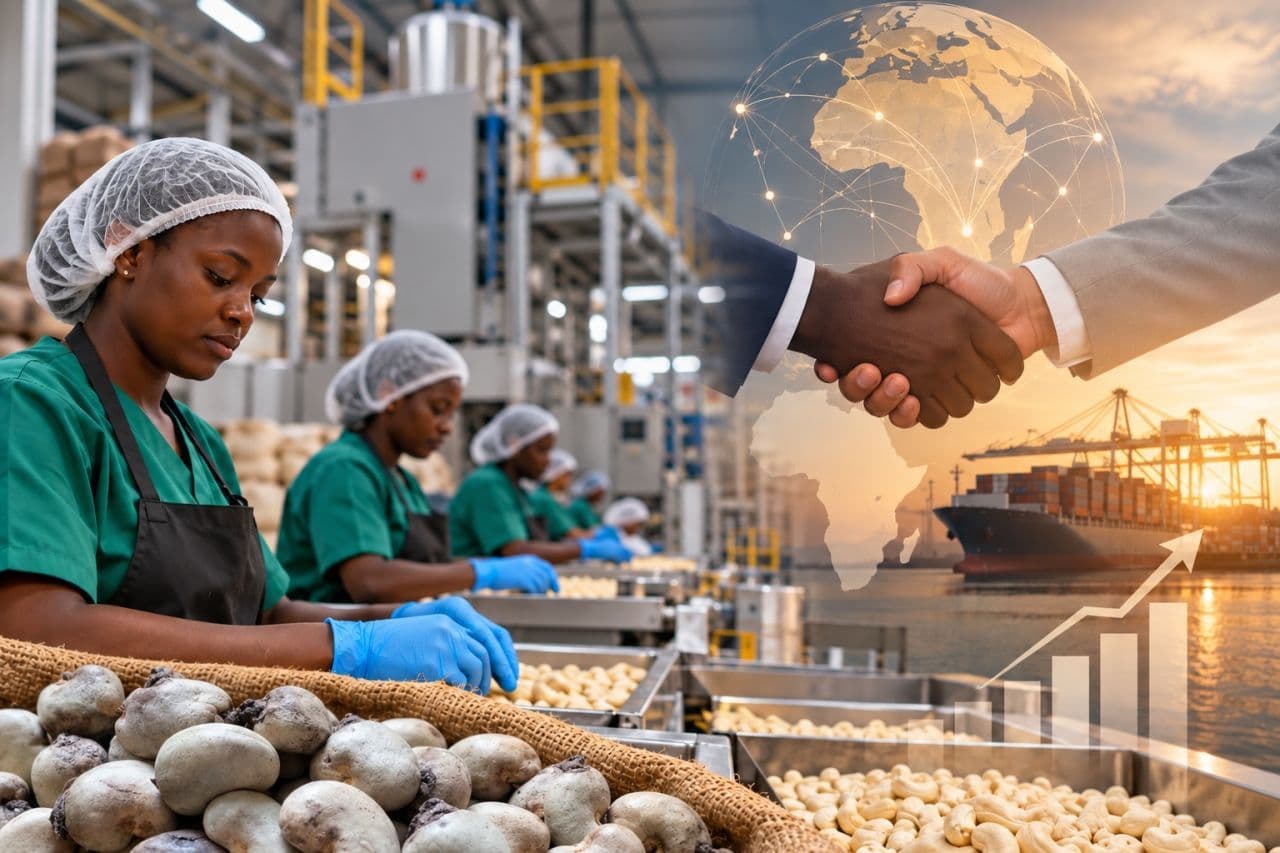
Across Africa, major producing countries—including Côte d'Ivoire, Benin, Tanzania, Guinea-Bissau, Mozambique and Ghana—are investing in domestic processing, value addition and brand development to increase export earnings, create jobs and strengthen manufacturing industries.
Cambodia now faces a similar opportunity.
Balancing Farmers and Processors
For CAC, the development of Cambodia's processing industry must ultimately maintain a balance between farmers and processors.
Farmers need competitive and fair prices for their RCN. Processors, meanwhile, need sufficient quantities of quality raw material at commercially viable prices to operate efficiently and compete in international markets.
A stronger domestic processing industry should therefore not be built at the expense of farmers.
Instead, the objective should be to create a competitive market in which farmers have access to multiple buyers while processors have reliable access to quality RCN.
If farmers receive a fair and competitive price, Cambodia should welcome investment from both domestic and international processors.
Such an approach can help Cambodia move from being predominantly an RCN-producing country toward becoming a competitive global cashew-processing and value-added industry.
For CAC, international study missions and cooperation with major producing countries are part of this broader effort to learn from global experience and identify approaches that can be adapted to Cambodia's own circumstances.
As Cambodia's RCN production continues to grow, the next stage of the industry's development will depend not only on how many tonnes the country produces, but also on how much value Cambodia can retain through processing, manufacturing, branding and exports.