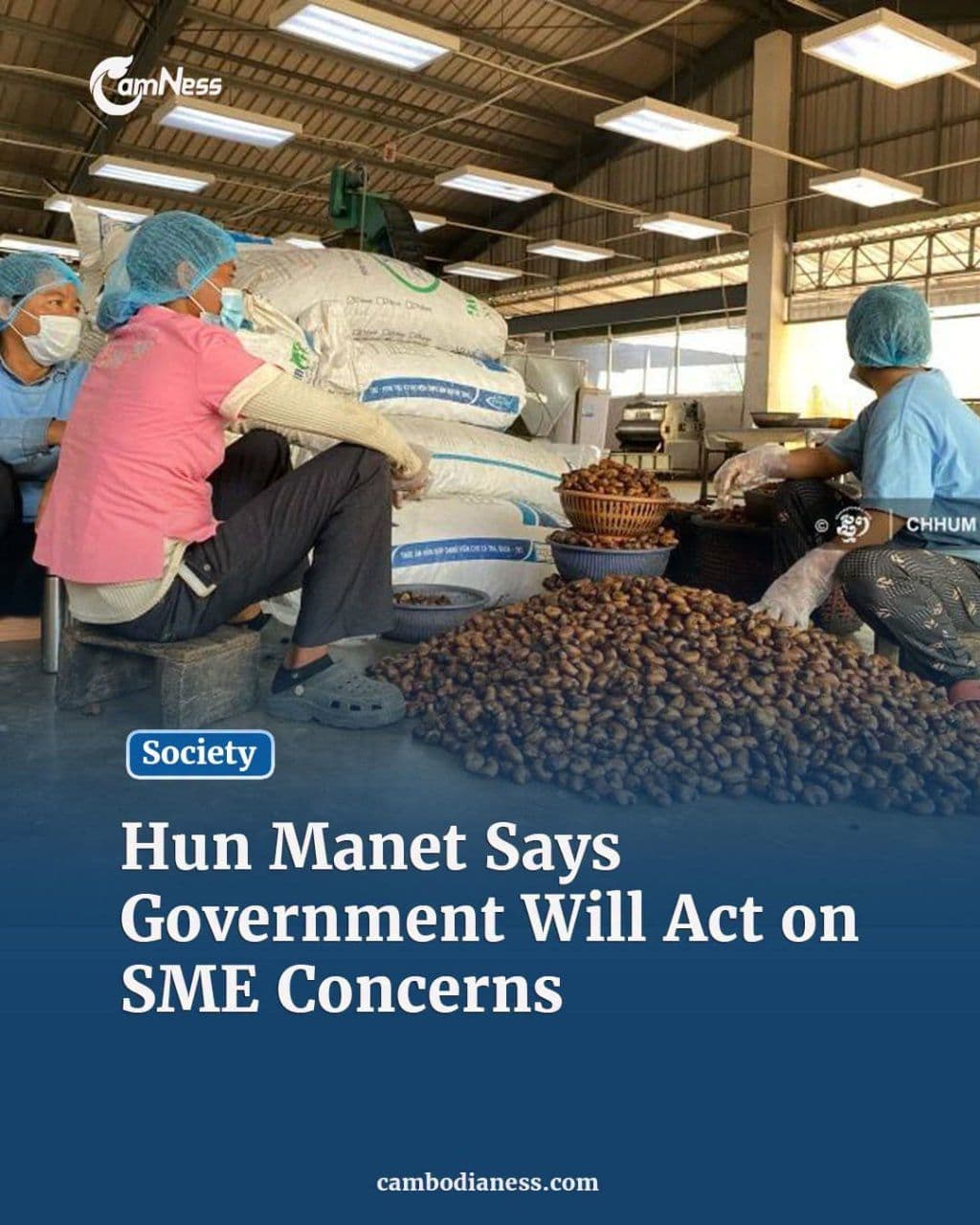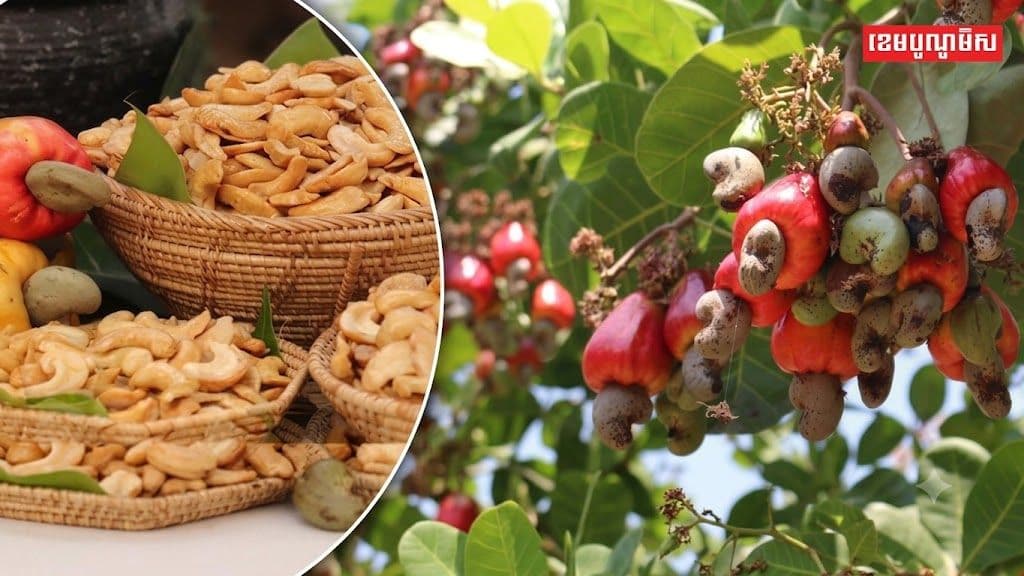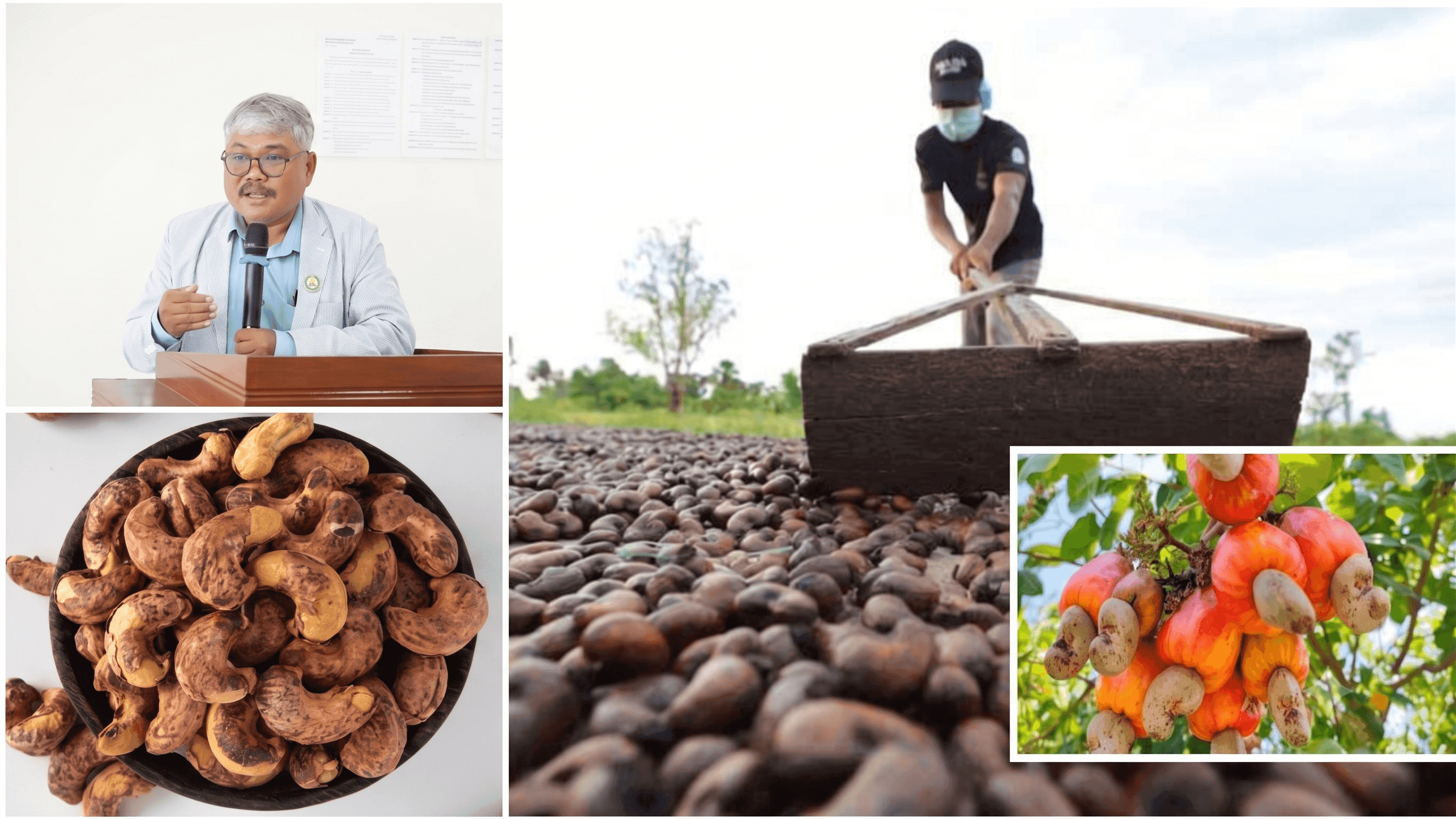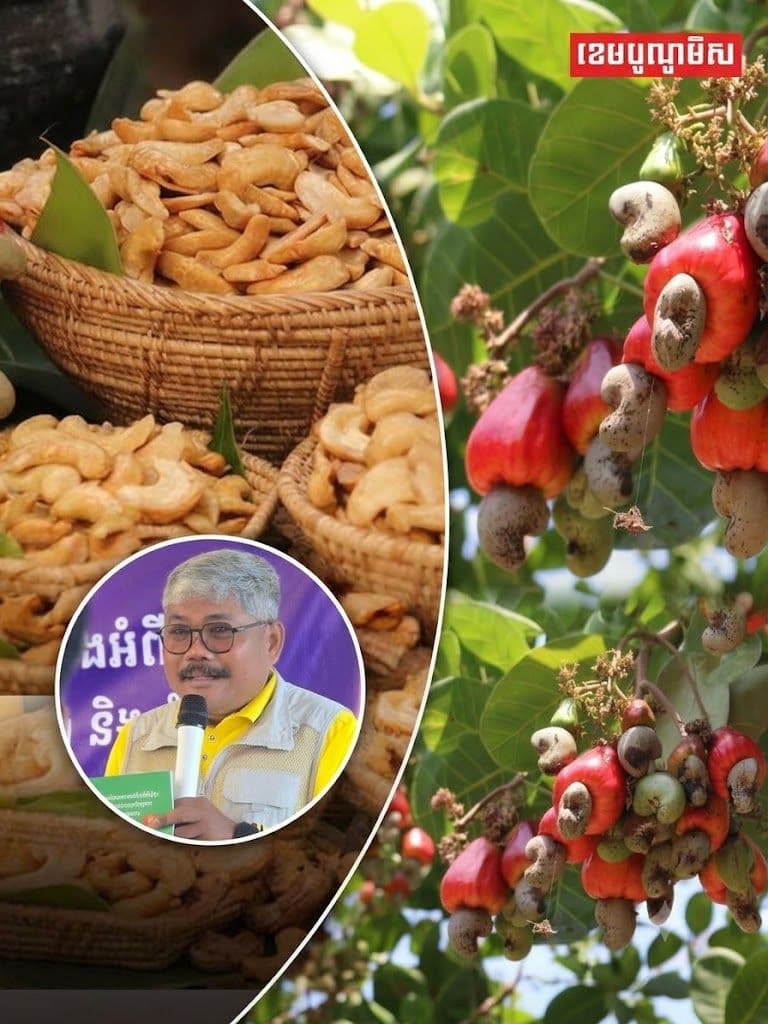
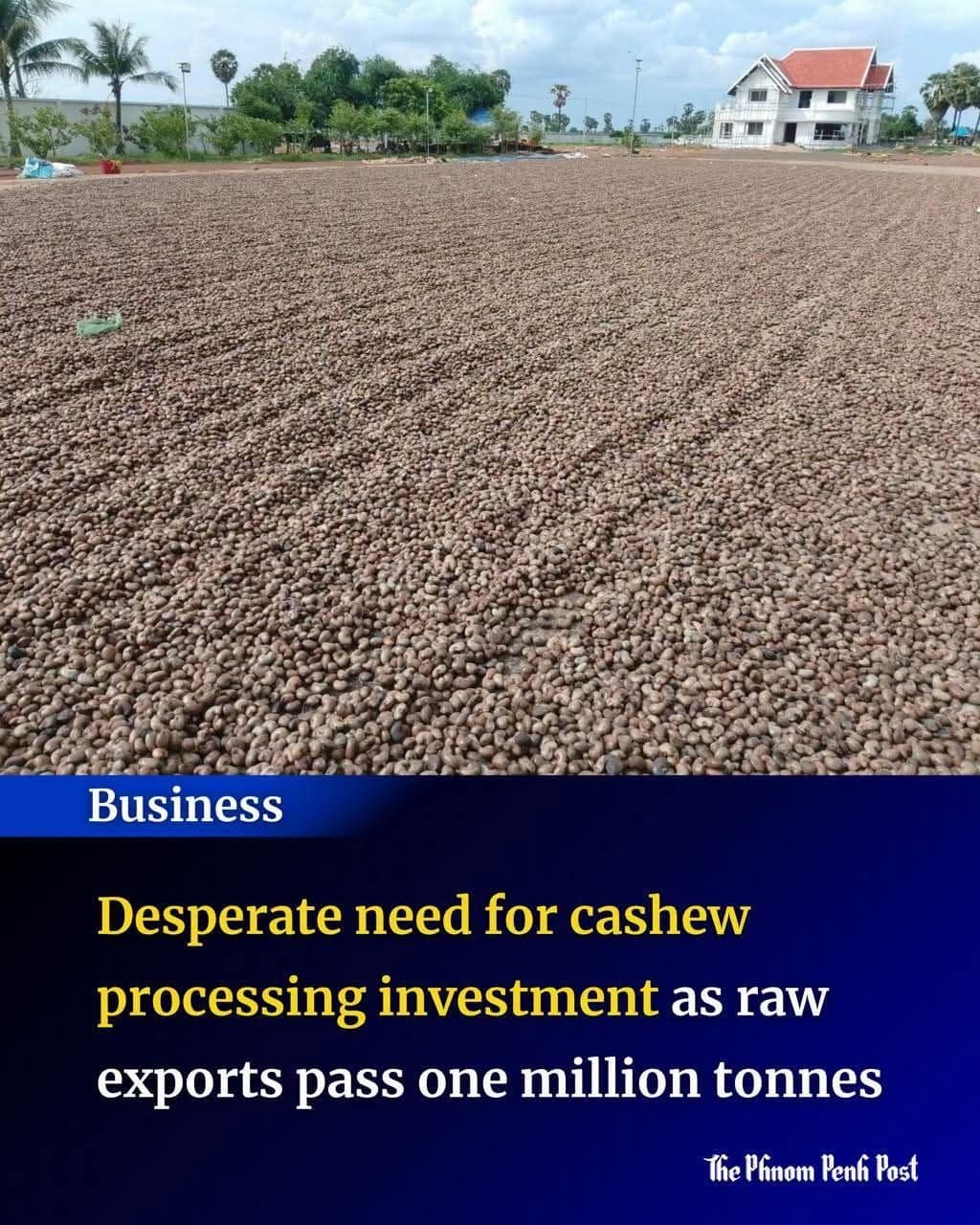
A lack of domestic storage and processing capacity led to the export of more than one million tonnes of raw Cambodian cashew nuts during the first half of 2026.
Industry experts have renewed calls for greater investment in local processing so the country can capture significantly more value from its cashew industry.
Unofficial data compiled by the Cashew Nut Association of Cambodia (CAC) showed that Cambodia exported approximately 1.03 million tonnes of raw cashew nuts in the first half of the year, generating around $1.75 billion in revenue, an increase of 28.9% over the same period in 2025.
An overwhelming majority of the raw nuts were exported to Vietnam, where they were processed into valued added products.
Silot Uon, CAC president, told The Post on July 22 that expanding cultivation and high yields, matched with limited processing capacity, result in large volumes of raw cashews being shipped to Vietnam every year.
Despite the strong export performance, Silot highlighted that Cambodia processes only a very small proportion of its cashew production domestically.
“Although Cambodia remains one of the world’s leading suppliers of raw cashew nuts, expanding domestic processing has become essential to capture greater value-added, create new jobs, and strengthen Cambodia’s competitiveness in the global cashew industry,” he said.
Market analysts note that supply from major producing countries remains unstable, while processors try to balance high raw material costs against cautious purchasing by importers. Although prices of processed cashew kernels appear relatively stable, production costs continue to fluctuate, creating uncertainty over whether current prices represent the market’s lowest point or merely a temporary pause.
“The next few weeks will determine whether strong demand pushes kernel prices even higher, or whether cautious buying delays the next upward price movement,” said industry analyst Jim Fitzpatrick.
He noted that many processing plants located thousands of kilometres from raw cashew-producing countries are facing significantly higher operating costs because of transportation expenses and export duties.
He emphasised the economic advantages of expanding processing capacity in producing countries.
“The answer is very simple: process closer to where the raw cashew nuts are produced,” he added.
Côte d’Ivoire (Ivory Coast) has emerged as a leading example of this strategy. During the first five months of 2026, the country exported a record 44,403 tonnes of processed cashew kernels, up 51% from the same period last year, strengthening its position as the world’s second-largest exporter of processed cashew kernels, behind Vietnam.
The African nation’s rapid expansion of domestic processing has enabled a much larger share of its raw cashew harvest to be converted into higher-value products before export.
For now, Cambodia is forced to accept its role as one of the world’s leading suppliers of raw nuts.