
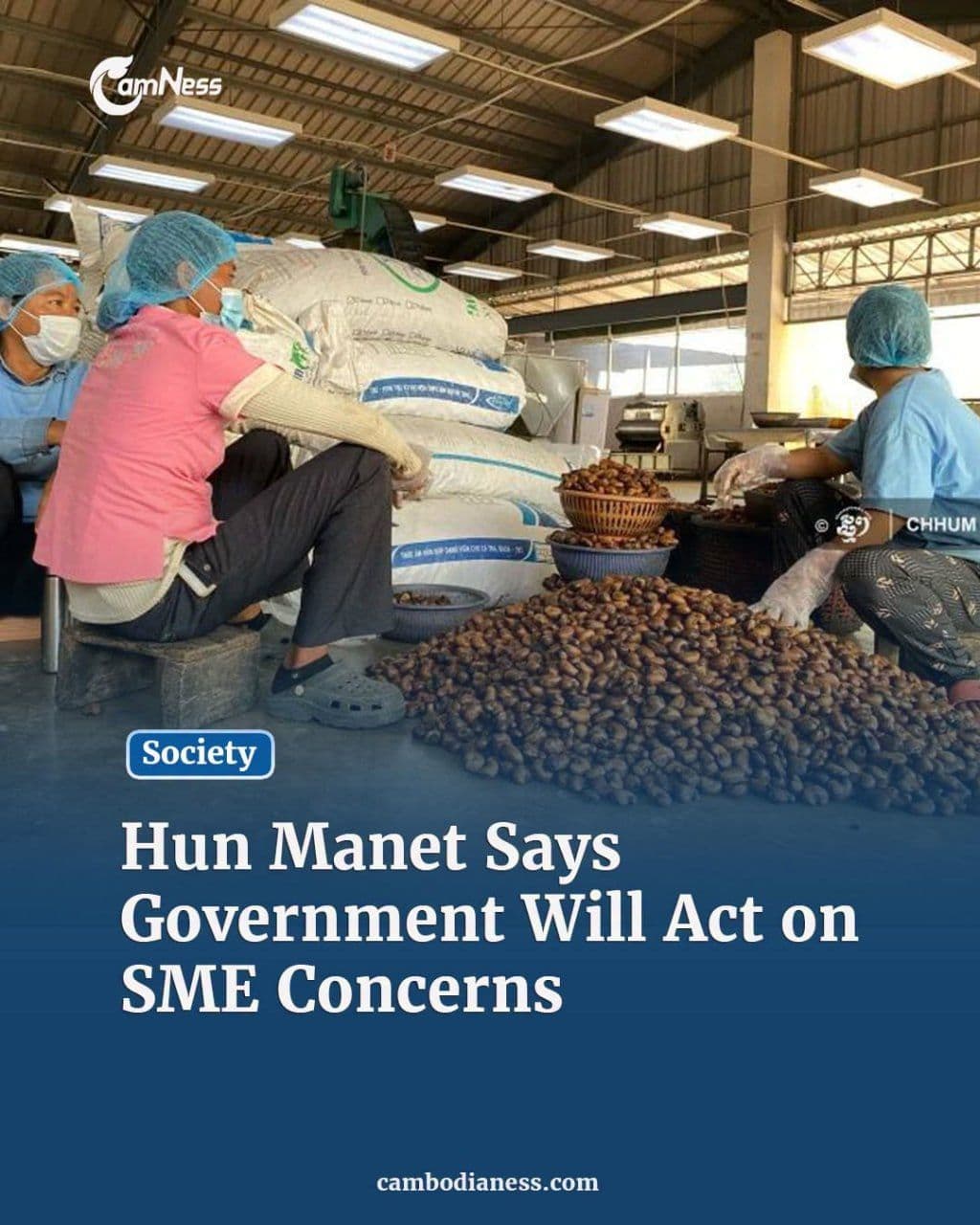
PHNOM PENH – Prime Minister Hun Manet has invited Cambodia's small and medium-sized enterprises (SMEs) to tell the government what is holding them back after criticism over the bureaucracy involved in opening a soap manufacturing business reignited debate about the country's business environment.
 In a message released on July 19, Hun Manet said he wanted SME owners to share the challenges they face and propose solutions so the government could respond more effectively.
"I welcome all people's feedback, especially from SMEs, regarding the challenges they face and possible solutions," Hun Manet said.
His remarks followed public criticism of the lengthy and bureaucratic process required to register and open a soap manufacturing business. Although he did not refer to the case directly, the timing suggested the government was responding to growing frustration among entrepreneurs over business registration procedures.
Hun Manet said he had appointed Deputy Prime Minister and Minister of Economy and Finance Aun Pornmoniroth to chair a committee responsible for coordinating emergency measures to address SME concerns and provide additional support for business owners.
He said the government regularly consults business associations, relevant ministries and SME representatives before introducing new policies and would use industry feedback to improve future support measures.
While acknowledging progress in developing the sector, Hun Manet said significant challenges remain.
He also said Cambodia must strengthen local production as it seeks to reduce its dependence on imports, making SMEs increasingly important to the country's long-term economic growth.
According to the Cambodia Economic Census 2022, the country has about 753,670 business establishments, including more than 60,500 small and medium-sized enterprises. The sector employs nearly three million people, contributes about 63 percent of Cambodia's gross domestic product and accounts for more than 70 percent of non-agricultural employment.
The closure of the Cambodia-Thailand border and the growing consumer boycott of Thai products following the border conflict have also increased demand for locally made goods, giving Cambodian manufacturers and SMEs an opportunity to expand production and win a larger share of the domestic market.
Despite their contribution to the economy, SMEs continue to face longstanding obstacles, including limited access to finance, cumbersome administrative procedures, corruption, skills shortages, and high electricity and logistics costs.