
PHNOM PENH, Cambodia, June 11 — Cambodia's private sector has called for stronger government support and regulatory reforms to address persistent challenges facing small and medium enterprises (SMEs), which industry leaders describe as the backbone of the national economy.
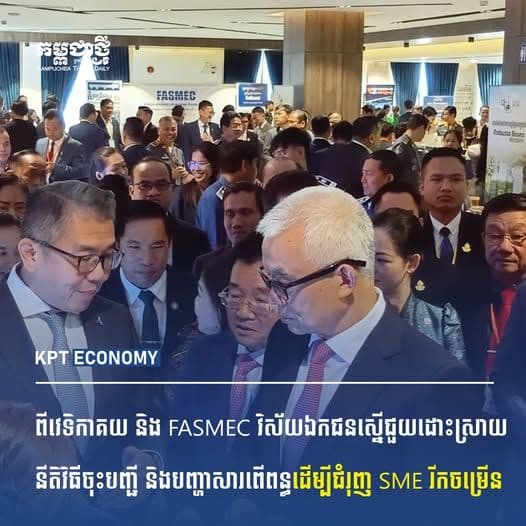
Speaking at the Customs and FASMEC Forum held under the theme "Supporting and Protecting Small and Medium Enterprises to Promote Domestic Production and Competitiveness," Oknha Te Tang Por, Chairman of the Board of Directors of the Federation of Associations of Small and Medium Enterprises of Cambodia (FASMEC), highlighted a range of obstacles that continue to constrain the sector's growth.
He noted that SMEs play a critical role in driving economic development, creating jobs, generating income, promoting local products, and strengthening Cambodia's economic competitiveness. However, many enterprises continue to struggle with limited access to financing, insufficient knowledge of registration and tax requirements, technological constraints, import-export complications, and intense competition from imported products.
Other challenges include high operating costs, limited awareness of customs procedures and international trade standards, and the need for stronger cooperation between businesses and local authorities.
To improve the business environment and support domestic production, FASMEC urged relevant institutions to implement five key measures. These include simplifying customs procedures for importing production inputs, expanding training and awareness programs on customs regulations, establishing special support mechanisms for local products, accelerating digitalization to reduce costs and processing times, and maintaining regular public-private dialogue platforms to address business concerns.
"The development of SMEs is essential to Cambodia's economic future, and greater cooperation between the government and private sector is needed to overcome existing barriers," Te Tang Por said.
The forum, jointly organized by FASMEC and the General Department of Customs and Excise of Cambodia (GDCE), served as a platform for stakeholders to exchange views, discuss challenges, and identify practical solutions to improve the competitiveness of Cambodian enterprises.
Responding to the concerns raised by the private sector, H.E. Kun Nhem, Minister Attached to the Prime Minister and Director General of GDCE, acknowledged the importance of micro, small, and medium enterprises (MSMEs) as a key driver of economic activity, employment, and domestic production.
He emphasized that reducing business costs, simplifying procedures, and facilitating trade are crucial to helping Cambodian enterprises expand and compete in increasingly demanding markets.
Kun Nhem highlighted a series of customs reforms and modernization initiatives aimed at supporting the private sector. These include the implementation of the Automated System for Customs Data (ASYCUDA), electronic payment systems for duties and taxes, risk management mechanisms, and the National Single Window platform, all designed to streamline trade procedures and improve service efficiency.
He also pointed to government policies that provide customs duty and tax incentives for machinery, production equipment, and manufacturing inputs, including exemptions for qualified SMEs.
A key outcome of the forum was the signing of a Memorandum of Understanding (MoU) between GDCE and FASMEC. The agreement is expected to strengthen cooperation between customs authorities and the private sector, improve awareness of customs procedures, enhance business capacity, and help enterprises take full advantage of government incentive programs.
Industry leaders view the partnership as an important step toward creating a more supportive business environment and strengthening the competitiveness of Cambodian SMEs in regional and global markets.
Source: KPT Economy